
How to Prevent Green Pool Water During Summer
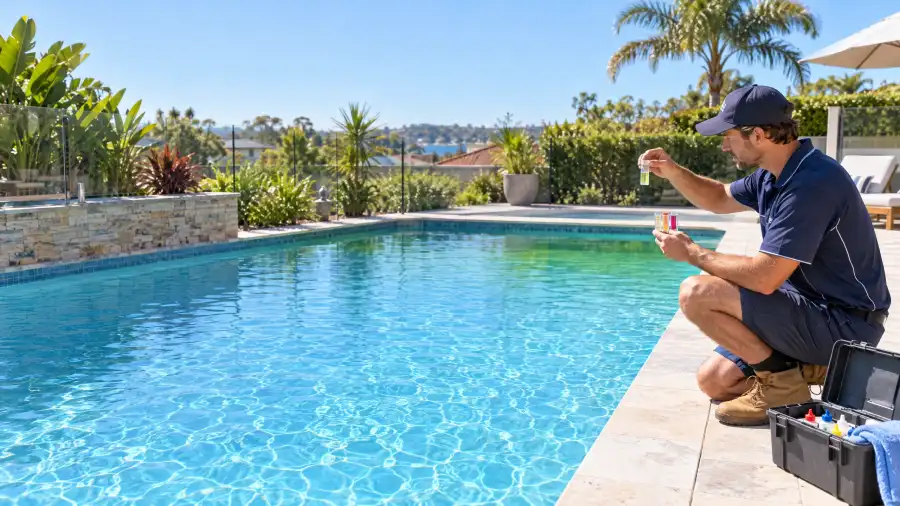
A practical routine for keeping your pool clear through hot weather, heavy use, storms and the busy Christmas period.
A green pool is usually a warning that several small maintenance issues have lined up: sanitiser has fallen, debris has accumulated, circulation is poor or the filter is overdue for attention. In a Box Hill summer, warm water, strong sun, leafy gardens and sudden storms can make that change happen quickly.
The good news is that prevention is mostly about consistency. A few minutes of observation each day, a proper clean each week and a sensible testing routine can stop algae getting an opportunity to spread. This guide explains what to do before summer, what to check during a heatwave and when it makes sense to ask a professional to inspect the water or equipment.
Why pool water turns green in summer
Green water is commonly associated with algae growth. Algae can take hold when the pool’s sanitiser is too low for the conditions, especially when sunlight and warm water accelerate growth. Leaves, pollen, insects and other organic matter add further demand to the water and can block baskets or filters.
Circulation matters just as much as chemistry. A pump that runs for too little time, a dirty filter, a blocked skimmer basket or a malfunctioning chlorinator can leave parts of the pool under-treated. The result may begin as a slippery patch on a wall or a faint green tint before becoming a full pool recovery job.
For a clear overview of the services available locally, visit the Box Hill pool services hub. It can help you match a visible problem with the appropriate type of support rather than treating every issue the same way.
Get your pool ready before the hot weather arrives
Prevention starts before the first run of 30-degree days. If your pool has been covered or used less during winter, do not simply remove the cover and jump straight in. Clear debris, inspect the equipment and establish a clean baseline for the water.
Skim the surface, empty the skimmer and pump baskets, and vacuum the floor. Brush the walls, steps and corners where early algae can hide. Clean the filter according to its type and the manufacturer’s directions. Look for leaks, cracked lids, unusual noises, low pressure or a pump that struggles to prime.
Next, test the water before adding anything. Check pH, sanitiser and alkalinity using a suitable test method, and follow the product label or advice from a pool professional. If readings are confusing or keep drifting, arrange professional testing rather than repeatedly adding chemicals without knowing what the water needs.
If your pool has just come out of its winter routine, the existing guide on preparing a Box Hill pool for spring provides a useful opening sequence for debris removal, chemistry and equipment checks.
A practical summer routine
1. Remove leaves and debris early
Do not wait for the skimmer to become full. Remove leaves, blossom and insects whenever you notice them, particularly after a windy day. Organic matter consumes sanitiser as it breaks down and can become a food source for algae. Keep the area around the pool tidy as well, so the next gust or storm has less material to carry into the water.
2. Brush before a problem becomes visible
Brush the walls, steps, floor edges and waterline on a regular schedule. Brushing lifts the film where algae may begin to attach and lets the filter deal with suspended particles. Pay extra attention to shaded areas, corners and behind ladders, where circulation may be weaker.
3. Test more often during heat and heavy use
A weekly check is a useful minimum for many home pools, but summer conditions can change the water faster. Test after a heatwave, a large gathering, heavy rain or several days of intense swimming. More swimmers bring sunscreen, sweat and other organic load into the water, while storms can dilute the chemistry and add debris.
Record the date and results so you can spot a pattern. If pH or sanitiser repeatedly moves out of range, there may be a circulation, dosing, stabiliser or equipment issue that deserves investigation. A professional pool chemistry balancing service can help identify the cause and set a sensible treatment plan.
4. Keep circulation and filtration consistent
Run the pump for the time recommended for your pool, equipment and conditions. A longer run may be appropriate during hot weather or after storms, but the correct setting depends on the system. Check that return jets are flowing, baskets are clear and the filter pressure is not indicating a restriction.
Never ignore a pump that stops, a filter that will not hold pressure or a chlorinator that displays a fault. Those problems can allow green water to develop even when you have been testing regularly. If you are unsure whether the system is working properly, arrange an equipment inspection rather than guessing.
5. Keep water level and cover habits sensible
Water levels fall through evaporation, splash-out and small losses around the system. A level that is too low can affect skimmer performance. Top up as needed and investigate an unusual drop instead of treating it as normal evaporation. If you use a cover, remove it as directed and allow the pool to breathe according to the cover and equipment instructions.
Before leaving for a long weekend or holiday, give the pool a deliberate handover rather than assuming the timer will manage everything. Remove debris, empty baskets, check the filter pressure and record the latest test results. Make sure gates and equipment areas can be accessed, and ask a trusted person or service provider to look in after a storm. A quick visual check can catch a stopped pump or overflowing skimmer before warm weather turns it into green water.
What to do after a storm or heatwave
Storms and heatwaves are the moments when prevention pays off. After strong wind or rain, remove larger debris, empty baskets and check that the pump is operating. Test the water before making adjustments. Avoid mixing products and do not add a large amount of treatment simply because the water looks different.
During a heatwave, inspect the pool more frequently and keep the routine short but regular: skim, check the baskets, look at the waterline, test and confirm circulation. If the water starts to look dull or develops a green tint, act promptly. Early advice is generally more useful than waiting until the whole pool changes colour.
When weekly or regular service is worthwhile
Some Box Hill pools need more oversight than others. Weekly visits are especially practical for pools under mature trees, pools used by a busy family, heated or salt pools, rental properties and homes that are empty during holidays. Regular care also suits owners who prefer not to spend every weekend vacuuming and testing.
A scheduled visit can include skimming, vacuuming, brushing, basket and filter checks, water testing, balancing and an equipment inspection. See the weekly pool service in Box Hill page for details on how a regular schedule works. For a more flexible approach, pool maintenance in Box Hill can be tailored to the pool’s condition and use.
Summer green-pool prevention checklist
- Skim leaves and debris before they break down.
- Empty skimmer and pump baskets regularly.
- Brush walls, steps, corners and the waterline.
- Test pH and sanitiser at least weekly, and after extreme weather or heavy use.
- Keep the filter clean and watch for unusual pressure.
- Confirm the pump, return jets and chlorinator are operating normally.
- Check water level and investigate unexplained losses.
- Keep swimmers out of green or cloudy water until it has been tested.
- Arrange regular service if the pool is leafy, heated, heavily used or often unattended.
What if the pool has already started turning green?
Stop swimming and avoid adding products at random. Remove accessible debris, keep the pump running if it is operating normally and test the water. Do not drain the pool without advice, as draining can create risks for some pool structures and liners. Do not mix chemicals together.
For a visible green bloom, professional treatment may be the quickest way to assess the algae, clean the filter, correct the chemistry and restore circulation. The green pool cleaning and recovery service explains the testing, cleaning, treatment, filtration and re-testing process. If the issue is time-sensitive because guests, an inspection or an event is approaching, use the emergency pool cleaning service to ask about same-day availability.
How long recovery takes depends on the colour and severity of the water, the type of algae, the condition of the filter and whether equipment is working correctly. A pool may need additional filtration or follow-up attention, so it is better to plan around the condition of the water than a fixed promise.
Frequently asked questions
How often should I test my pool in summer?
Weekly testing is a useful baseline for many home pools. Test more often during hot spells, after storms, after a party or when the water looks or smells different. Follow the instructions for your test kit and seek professional testing if results are inconsistent.
Can strong sun make a pool go green?
Strong sun can increase chlorine demand and warm the water, creating conditions in which algae grows more readily if sanitiser and circulation are not keeping up. Sun is usually one factor among several, alongside debris, filter condition and pool use.
Should I run the pump all day during a heatwave?
There is no single setting for every pool. Use the equipment manufacturer’s guidance and your pool professional’s recommendation. The important point is consistent circulation, a clean filter and prompt attention to any pump or chlorinator fault.
Is a slightly cloudy pool safe to swim in?
Do not rely on appearance alone. If you cannot clearly see the pool floor, or if the water is cloudy, unusual or green, keep people out until the water has been tested and the cause addressed.
How can I keep the pool clear while I am away?
Clean and test the pool before leaving, confirm the equipment timer and arrange a trusted person or regular service to check the pool during hot weather. A covered pool still needs circulation, equipment checks and attention after storms.